AOP
1. 什么是AOP
AOP(Aspect Oriented Programming)意为:面向切面编程,通过预编译方式和运行期动态代理实现程序功能的同一维护的一种技术。AOP是OOP的延续,是软件开发中的一个热点,也是Spring框架中的一个重要内容,是函数式编程的一种衍生范型。利用AOP可以对业务逻辑的各个部分进行隔离,从而使得业务逻辑各部分之间的耦合度降低,提高程序的可重用性,同时提高了开发的效率。
AOP的主要功能
- 日志记录
- 性能统计
- 安全控制
- 事务处理
- 异常处理等
Spring AOP切面简单理解就是一把刀,在执行过程中可以随意地插入或拔出。
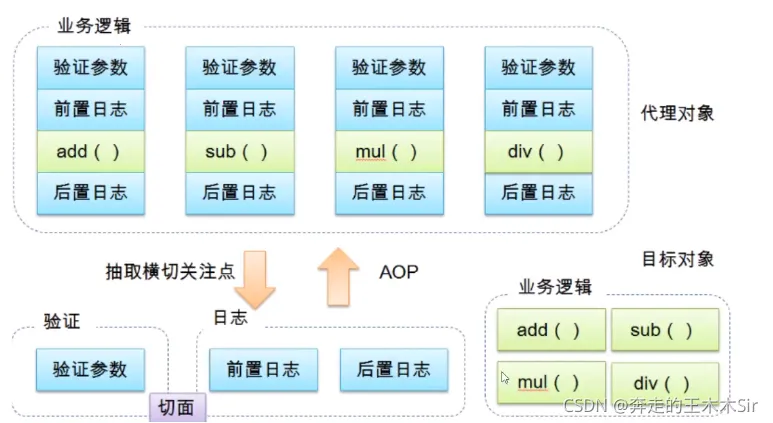
2. Aop在Spring中的作用
提供声明式事务;允许用户自定义切面
- 横切关注点:对哪写方法进行拦截,拦截后又怎么处理,与我们业务逻辑无关的,但我们需要关注的部分,就是横切关注点,如日志,安全,缓存,事务等。跨越应用程序多个模块的方法或功能。
- 切面(ASPECT):横切关注点被模块化的特殊对象,即它是一个类
- 通知(Advice):切面必须要完成的工作,即它是类中的一个方法
- 目标(Target):被通知对象,也就是代理的目标对象。
- 代理(Proxy):向目标对象应用通知后创建的对象。
- 切入点(PointCut):切面通知执行的”地点“的定义
- 连接点(JointPoint):与切入点匹配的执行点。
- 织入(weave):将切面应用到目标对象并导致代理对象创建的过程。
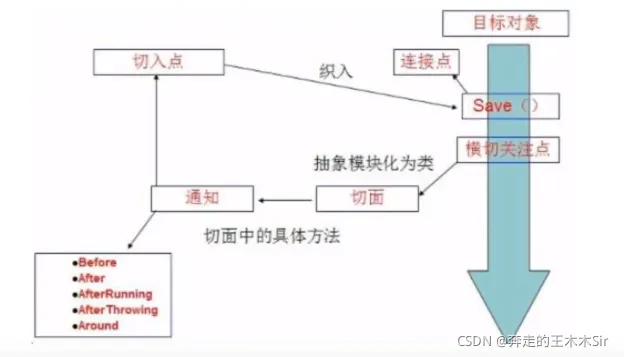
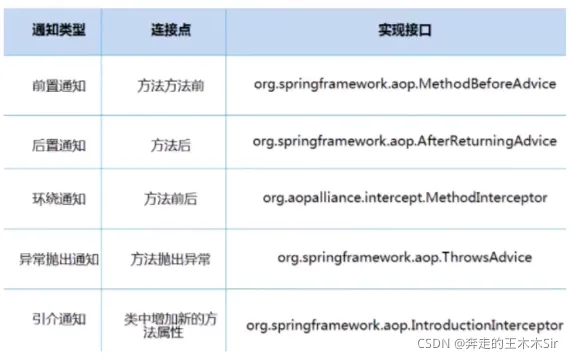
SpringAOP中,通过Advice定义横切逻辑,Spring中支持5种类型的Advice
3. 使用Spring实现AOP
【重点】使用AOP织入,需要导入一个依赖包
<dependencies>
    <dependency>
        <groupId>org.aspectj</groupId>
        <artifactId>aspectjweaver</artifactId>
        <version>1.9.7</version>
    </dependency>
</dependencies>
方式一:使用Spring的api接口[主要是api接口]
UserService
package com.hxl.service;
public interface UserService {
    public void add();
    public void delete();
    public void update();
    public void select();
}
UserServiceImpl
package com.hxl.service;
public class UserServiceImpl implements UserService{
    public void add() {
        System.out.println("增加了一个用户");
    }
    public void delete() {
        System.out.println("删除了一个用户");
    }
    public void update() {
        System.out.println("修改了一个用户");
    }
    public void select() {
        System.out.println("查询了一个用户");
    }
}
applicationContext.xml
<?xml version="1.0" encoding="UTF-8"?>
<beans xmlns="http://www.springframework.org/schema/beans"
       xmlns:xsi="http://www.w3.org/2001/XMLSchema-instance"
       xmlns:context="http://www.springframework.org/schema/context"
       xmlns:aop="http://www.springframework.org/schema/aop"
       xsi:schemaLocation="http://www.springframework.org/schema/beans
        http://www.springframework.org/schema/beans/spring-beans.xsd
        http://www.springframework.org/schema/context
        https://www.springframework.org/schema/context/spring-context.xsd
        http://www.springframework.org/schema/aop
        https://www.springframework.org/schema/aop/spring-aop.xsd">
    <!--注册bean-->
    <bean id="userService" class="com.hxl.service.UserServiceImpl"/>
    <bean id="log" class="com.hxl.log.Log"/>
    <bean id="afterLog" class="com.hxl.log.LogAfter"/>
    <!--使用原生的Spring API接口-->
    <!--配置aop:需要导入aop的约束-->
    <aop:config>
        <!--切入点;expression:表达式,execution(要执行的位置,修饰词,返回值,类名,方法名,参数)-->
        <aop:pointcut id="pointCut" expression="execution(* com.hxl.service.UserServiceImpl.*(..))"/>
        <!--执行环绕增加-->
        <aop:advisor advice-ref="log" pointcut-ref="pointCut"/>
        <aop:advisor advice-ref="afterLog" pointcut-ref="pointCut"/>
    </aop:config>
</beans>
测试:
import com.hxl.service.UserService;
import com.hxl.service.UserServiceImpl;
import org.springframework.context.ApplicationContext;
import org.springframework.context.support.ClassPathXmlApplicationContext;
public class MyTest {
    public static void main(String[] args) {
        ApplicationContext context = new ClassPathXmlApplicationContext("applicationContext.xml");
        //注意点:动态代理代理的是接口
        UserService userService = context.getBean("userService", UserService.class);
        userService.add();
    }
}
方式二:自定义来实现aop[主要是切面]
DiyPointCut
package com.hxl.diy;
public class DiyPointCut {
    public void before(){
        System.out.println("====方法执行前====");
    }
    public void after(){
        System.out.println("====方法执行后====");
    }
}
<!--方式二:自定义类-->
<bean id="diy" class="com.hxl.diy.DiyPointCut"/>
<aop:config>
    <!--自定义切面,ref要引用的类-->
    <aop:aspect ref="diy">
        <!--切入点-->
        <aop:pointcut id="point" expression="execution(* com.hxl.service.UserServiceImpl.*(..))"/>
        <!--通知-->
        <aop:before method="before" pointcut-ref="point"/>
        <aop:after method="after" pointcut-ref="point"/>
    </aop:aspect>
</aop:config>
方式三:使用注解来实现aop
package com.hxl.diy;
import org.aspectj.lang.ProceedingJoinPoint;
import org.aspectj.lang.Signature;
import org.aspectj.lang.annotation.After;
import org.aspectj.lang.annotation.Around;
import org.aspectj.lang.annotation.Aspect;
import org.aspectj.lang.annotation.Before;
//方式三:使用注解方式实现aop
@Aspect//标注这个类是一个切面
public class AnnotationPointCut {
    @Before("execution(* com.hxl.service.UserServiceImpl.*(..))")
    public void before(){
        System.out.println("====方法执行前====");
    }
    @After("execution(* com.hxl.service.UserServiceImpl.*(..))")
    public void after(){
        System.out.println("====方法执行后====");
    }
    //在环绕增强中,我们可以给定一个参数,代表我们要获取处理切入的点
    @Around("execution(* com.hxl.service.UserServiceImpl.*(..))")
    public void around(ProceedingJoinPoint jp) throws Throwable {
        System.out.println("====环绕前====");
        Signature signature = jp.getSignature();//获得签名
        System.out.println("signature:" + signature);
        //执行方法
        Object proceed = jp.proceed();
        System.out.println("=====环绕后====");
    }
}
<!--方式三:-->
<bean id="annotationPointCut" class="com.hxl.diy.AnnotationPointCut"/>
<!--开启注解支持
    JDK(默认proxy-target-class="false")
    cglib(proxy-target-class="true")
    -->
<aop:aspectj-autoproxy />