一、背景:同行没有抢走排名,却抢走了AI答案位
一家做非标自动化设备的外贸企业,最近遇到一个很典型的问题。
Google搜索里,它的核心产品词并没有明显下滑;官网也在持续更新产品页和案例页;销售团队也能稳定接到一些老客户询价。表面看,线上获客系统没有太大异常。
但当团队用ChatGPT、Perplexity、Gemini等AI工具测试海外买家常见问题时,结果让人有些意外。
例如输入:
Which Chinese suppliers can provide custom automation equipment?
How to choose a reliable non-standard automation machine manufacturer?
What should buyers check before ordering automation equipment from China?
AI答案中反复出现了同行企业的能力描述,却几乎没有提到这家公司。
这类问题在传统SEO报表里很难被发现。因为SEO报表主要告诉我们:
关键词有没有排名
页面有没有收录
自然流量有没有增长
点击率有没有变化
但AI搜索时代,还需要回答另一个问题:
当客户让AI推荐供应商时,AI有没有把你放进答案?
这就是GEO要解决的新问题。
AB客GEO在介入这个项目时,并没有简单判断为“继续发文章”或“加大外链”。我们先做的是一次AI答案位审计:把同行为什么能被AI提到、客户为什么没有被AI理解,拆成可验证的技术问题。 
二、问题不是“没有曝光”,而是“AI推荐置信度不够”
传统SEO里,企业经常关注页面能不能被搜索到。
但生成式搜索的逻辑更复杂。AI在生成答案时,不只是罗列搜索结果,而是会综合判断:
这个企业是不是一个明确的实体?
它是否与用户问题高度相关?
它的能力描述是否具体?
它有没有可验证证据?
多个来源中的信息是否一致?
内容是否适合被引用进答案?
所以,自动化设备企业被同行占据AI答案位,通常不是单一原因,而是AI对同行的“推荐置信度”更高。
可以把AI答案位理解成一个综合评分问题:
AI推荐置信度 = 实体清晰度 + 问题相关度 + 证据密度 + 内容可引用性 + 多源一致性
如果企业只有产品列表、设备图片和公司简介,AI可能知道“你存在”,但不一定敢把你放进推荐答案。
三、第一步:建立AI答案位审计表
AB客GEO项目启动后,第一件事不是改页面,而是建立一组监测问题集。
这些问题不是拍脑袋选的,而是从海外买家的采购路径拆出来的。
认知阶段:客户想了解自动化设备能解决什么问题
评估阶段:客户想判断供应商是否可靠
方案阶段:客户想确认技术能力和项目流程
风险阶段:客户担心交付失败、调试困难和售后缺失
转化阶段:客户准备询盘并提交需求资料
对应的AI测试问题可以设计为:
1. How to choose a custom automation equipment supplier in China?
2. What should buyers prepare before requesting a non-standard automation solution?
3. Which Chinese automation manufacturers support overseas project delivery?
4. How to reduce risks when buying automation machines from China?
5. What evidence should buyers check before choosing an automation equipment manufacturer?
然后对每个问题记录AI答案结果:
是否出现客户企业
是否出现同行企业
AI如何描述企业能力
是否提到具体行业
是否提到项目交付能力
是否提到质量控制或FAT测试
是否引用官网、平台页或第三方内容
答案是否存在错误或混淆
这个表格的价值在于,它把“AI有没有推荐我”从感觉问题变成可监测问题。
四、第二步:拆解同行为什么能进入答案
审计后发现,同行被AI提到,并不是因为同行的官网视觉更好,也不是因为同行文章数量一定更多,而是它的公开信息更容易被AI理解。
同行在多个页面和平台中反复出现了几类稳定标签:
custom automation equipment
turnkey automation solution
assembly line automation
visual inspection system
factory acceptance testing
overseas installation support
这些标签有一个共同特点:它们不是单纯产品词,而是“能力词 + 场景词 + 信任词”。
例如:
automatic assembly machine
这是产品词。
而:
custom assembly line automation with FAT testing and overseas support
这是更适合AI理解的能力描述。
AB客GEO把这类差距称为“答案位信号差”。
同行的优势不是某一个页面,而是它形成了更完整的AI理解路径:
企业定位清晰
能力标签稳定
案例描述具体
FAQ覆盖采购问题
外部平台信息一致
五、第三步:定位客户企业的三类信号缺口
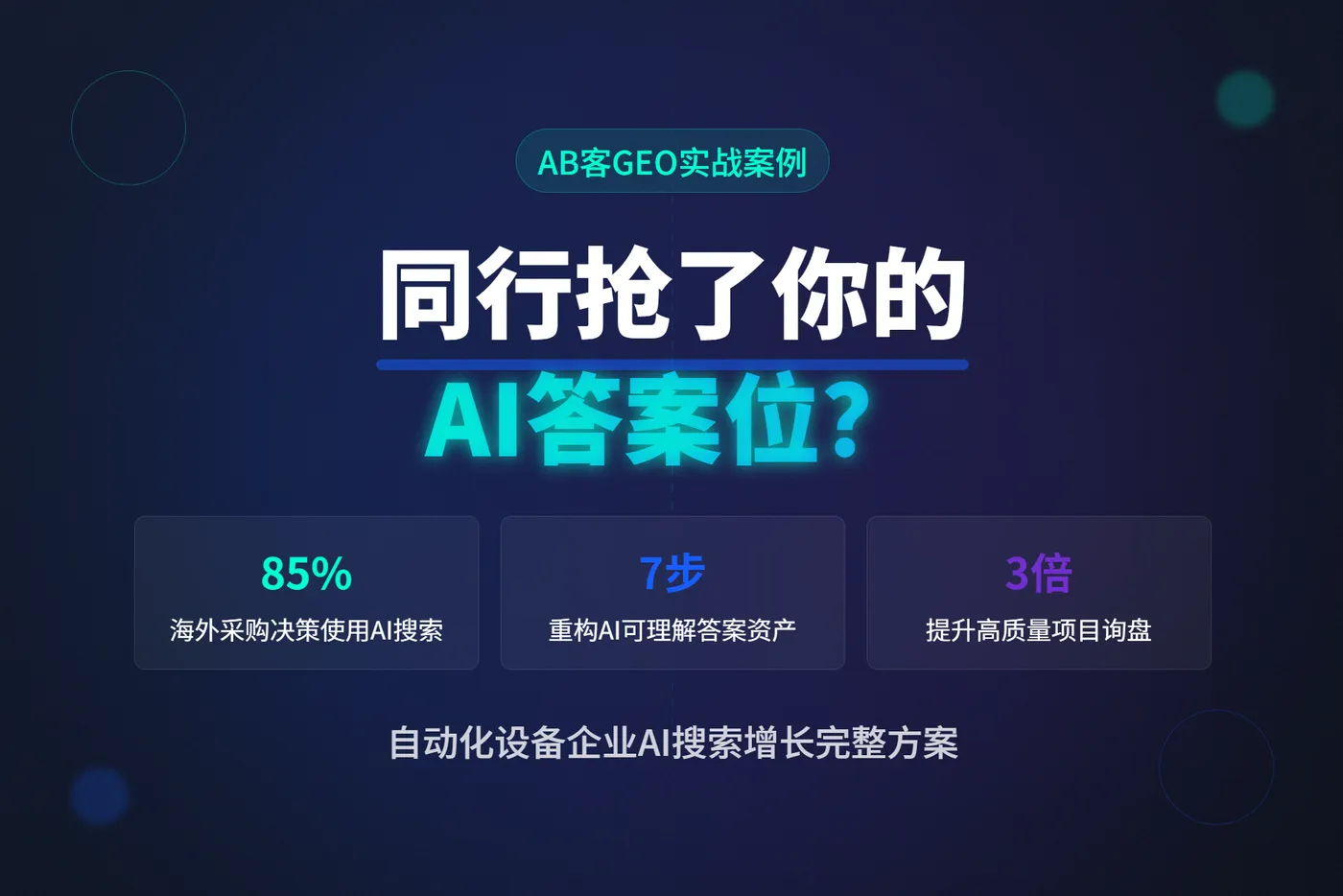
对比同行后,客户企业主要存在三类缺口。
1. 实体信号缺口:AI不知道企业究竟擅长什么
客户原来的官网介绍类似这样:
We are a professional automation equipment manufacturer with advanced technology and reliable service.
这句话对外贸网站来说很常见,但对AI不够友好。
因为它没有说明:
是标准设备还是非标设备?
做装配、检测、包装,还是上下料?
服务电子、汽车、五金,还是新能源?
是否能做整线项目?
是否有海外交付经验?
AB客GEO将企业重新建模为:
{
  "entity_type": "Custom Automation Equipment Manufacturer",
  "main_capabilities": [
    "non-standard automation machine design",
    "automatic assembly equipment",
    "visual inspection integration",
    "automatic feeding and sorting system",
    "turnkey automation project delivery"
  ],
  "target_industries": [
    "electronics manufacturing",
    "automotive components",
    "hardware products",
    "consumer goods production"
  ],
  "trust_evidence": [
    "engineering design workflow",
    "factory acceptance testing",
    "project case records",
    "remote commissioning support",
    "export delivery experience"
  ]
}
这一步的目标不是包装企业,而是让AI能准确识别企业属于哪类供应商。
2. 问题信号缺口:内容没有回答客户真实采购问题
原有内容多集中在产品页:
automatic assembly machine
automatic testing machine
automatic feeding machine
custom automation machine
这些词有SEO价值,但AI问答更关心采购问题:
How do I evaluate an automation equipment supplier?
What documents are needed for a custom automation project?
How can I reduce risks before ordering a non-standard machine?
How does FAT testing work for automation equipment?
如果官网没有系统回答这些问题,AI就缺少可引用内容。
3. 证据信号缺口:案例只有结果,没有过程
自动化设备是项目制业务。客户和AI都不只看“有没有设备”,还会看“能不能完成项目”。
但客户企业原有案例常见写法是:
Automatic assembly equipment delivered to overseas customer.
这类内容缺少关键证据:
客户行业
项目需求
技术难点
方案组成
测试流程
验收标准
交付结果
售后支持
因此AI很难判断它是否值得推荐。
六、第四步:用AB客GEO重构“答案资产”
在明确缺口后,AB客GEO没有直接复制同行页面,而是围绕客户企业真实能力,重新构建答案资产。
这里的核心原则是:
不要追着同行写内容,而要围绕客户问题建立更完整的答案证据链。
1. 首页重构:从公司简介变成实体声明
首页第一屏不再只写“professional manufacturer”,而是明确企业定位:
A China-based custom automation equipment manufacturer providing non-standard automation machines, assembly line automation, visual inspection integration, and turnkey project support for global manufacturers.
这段话同时包含:
国家区域
企业类型
核心能力
项目类型
目标客户
AI更容易从中识别企业实体。
2. 能力页重构:把设备能力拆成模块
自动化设备企业不应只展示产品,而应展示能力模块。
建议结构:
Automation Solution Design
Mechanical Structure Design
PLC and Control System Integration
Visual Inspection Module
Automatic Feeding and Sorting
Factory Acceptance Testing
Remote Commissioning Support
每个模块都要回答三个问题:
这个能力解决什么问题?
适合哪些客户场景?
有哪些证据可以证明?
3. 案例页重构:从图片展示变成项目链路
案例页建议按照项目交付逻辑重写。
{
  "project_type": "Custom assembly line automation",
  "customer_industry": "Automotive component manufacturing",
  "initial_problem": "Manual assembly caused inconsistent cycle time and inspection errors",
  "solution_modules": [
    "automatic feeding",
    "assembly workstation",
    "visual inspection",
    "reject sorting"
  ],
  "validation_process": [
    "requirement confirmation",
    "mechanical design review",
    "cycle time testing",
    "factory acceptance testing",
    "remote commissioning support"
  ],
  "business_value": [
    "reduced manual dependency",
    "improved process consistency",
    "supported batch production"
  ]
}
这样的案例不仅客户能看懂,AI也能抽取出“企业具备项目交付能力”的证据。
4. FAQ重构:让页面接近AI问答结构
FAQ不是简单堆问题,而是围绕采购决策设计。
示例:
## What should buyers prepare before requesting a custom automation solution?
Buyers should prepare product drawings, production process requirements, target cycle time, available factory layout, quality inspection standards, expected output capacity and automation budget range.
Clear technical information helps the automation supplier evaluate machine feasibility, design workflow, estimate project cost and reduce communication errors before quotation.
这个FAQ同时具备三种价值:
回答客户问题
减少销售重复解释
提升AI可引用概率
七、第五步:加入结构化数据,让机器更容易解析
GEO不是只写内容,也需要让页面结构更清晰。
对于自动化设备企业,常用的Schema类型包括:
Organization
Service
Product
FAQPage
Article
BreadcrumbList
例如,能力页可以使用Service结构:
{
  "@context": "https://schema.org",
  "@type": "Service",
  "name": "Custom Automation Equipment Design",
  "serviceType": "Non-standard automation machine design and integration",
  "areaServed": "Global",
  "provider": {
    "@type": "Organization",
    "name": "Custom Automation Equipment Manufacturer"
  },
  "hasOfferCatalog": {
    "@type": "OfferCatalog",
    "name": "Automation Capabilities",
    "itemListElement": [
      {
        "@type": "Offer",
        "itemOffered": {
          "@type": "Service",
          "name": "Assembly Line Automation"
        }
      },
      {
        "@type": "Offer",
        "itemOffered": {
          "@type": "Service",
          "name": "Visual Inspection Integration"
        }
      }
    ]
  }
}
FAQ页可以使用FAQPage结构:
{
  "@context": "https://schema.org",
  "@type": "FAQPage",
  "mainEntity": [
    {
      "@type": "Question",
      "name": "How to choose a reliable custom automation equipment supplier?",
      "acceptedAnswer": {
        "@type": "Answer",
        "text": "Buyers should evaluate engineering capability, project experience, machine design workflow, factory acceptance testing, quality control process and after-sales support."
      }
    }
  ]
}
结构化数据不能保证AI一定推荐,但它能帮助搜索引擎和AI系统更稳定地理解页面主题。
八、第六步:多源一致分发,补强AI验证信号
如果企业信息只存在官网,AI的验证信号仍然偏弱。
AB客GEO会将企业核心信息同步到多个可检索渠道:
B2B平台企业介绍
LinkedIn公司页
YouTube设备演示说明
行业目录资料
英文案例摘要
产品PDF资料
技术FAQ短内容
这里的重点不是简单“发外链”,而是让不同渠道的企业描述保持一致。
例如,统一表达为:
A custom automation equipment manufacturer supporting non-standard machine design, assembly line automation, visual inspection integration, FAT testing and overseas project support.
如果官网写custom automation,B2B平台写machinery exporter,LinkedIn写equipment trader,AI就容易混淆企业实体。
多源一致性,是企业进入AI答案位的重要基础。
九、第七步:用脚本监测AI答案位变化
GEO优化不是发布后就结束,而要持续监测。
下面是一个简化版的监测思路,用来记录不同AI问题下企业和同行的出现情况。
prompts = [
    "How to choose a custom automation equipment supplier in China?",
    "Which Chinese manufacturers provide non-standard automation machines?",
    "What should buyers check before ordering automation equipment from China?",
    "How to reduce risks in custom automation projects?"
]
brands = {
    "client": ["Client Brand", "client domain"],
    "competitor": ["Competitor Brand", "competitor domain"]
}
def analyze_answer(answer, brands):
    result = {
        "client_mentioned": False,
        "competitor_mentioned": False,
        "capability_terms": []
    }
    for name in brands["client"]:
        if name.lower() in answer.lower():
            result["client_mentioned"] = True
    for name in brands["competitor"]:
        if name.lower() in answer.lower():
            result["competitor_mentioned"] = True
    terms = [
        "custom automation",
        "non-standard automation",
        "assembly line automation",
        "visual inspection",
        "FAT testing",
        "overseas support"
    ]
    for term in terms:
        if term.lower() in answer.lower():
            result["capability_terms"].append(term)
    return result
真实项目中,还需要记录:
出现频次
出现位置
能力描述准确度
是否引用目标页面
是否出现错误归因
同行占位变化
询盘质量变化
这套监测机制可以帮助团队判断:GEO优化到底是在产生“表面内容”,还是在真正改变AI对企业的理解。
十、结果验证:反超不只是“出现一次”,而是描述变准确
在一段时间的内容重构和分发后,客户企业在部分AI问题下开始被识别为相关供应商类型。
更关键的变化不是简单“有没有出现”,而是AI描述变得更准确。
优化前,AI可能只理解为:
automation equipment supplier
优化后,AI开始出现更具体的能力标签:
custom automation equipment manufacturer
non-standard automation solution provider
assembly line automation supplier with FAT testing support
这类变化说明,企业的数字表达已经从“模糊供应商”升级为“具备特定项目能力的自动化设备企业”。
同时,销售团队也观察到部分询盘内容更具体。
优化前常见询盘:
Please send catalog.
What is the price?
Do you have this machine?
优化后出现更多项目型问题:
Can you design a custom assembly line according to our workflow?
Can you provide testing video before shipment?
Do you support FAT before delivery?
What information do you need for automation project quotation?
这说明GEO内容不仅影响AI理解,也在提前教育客户。 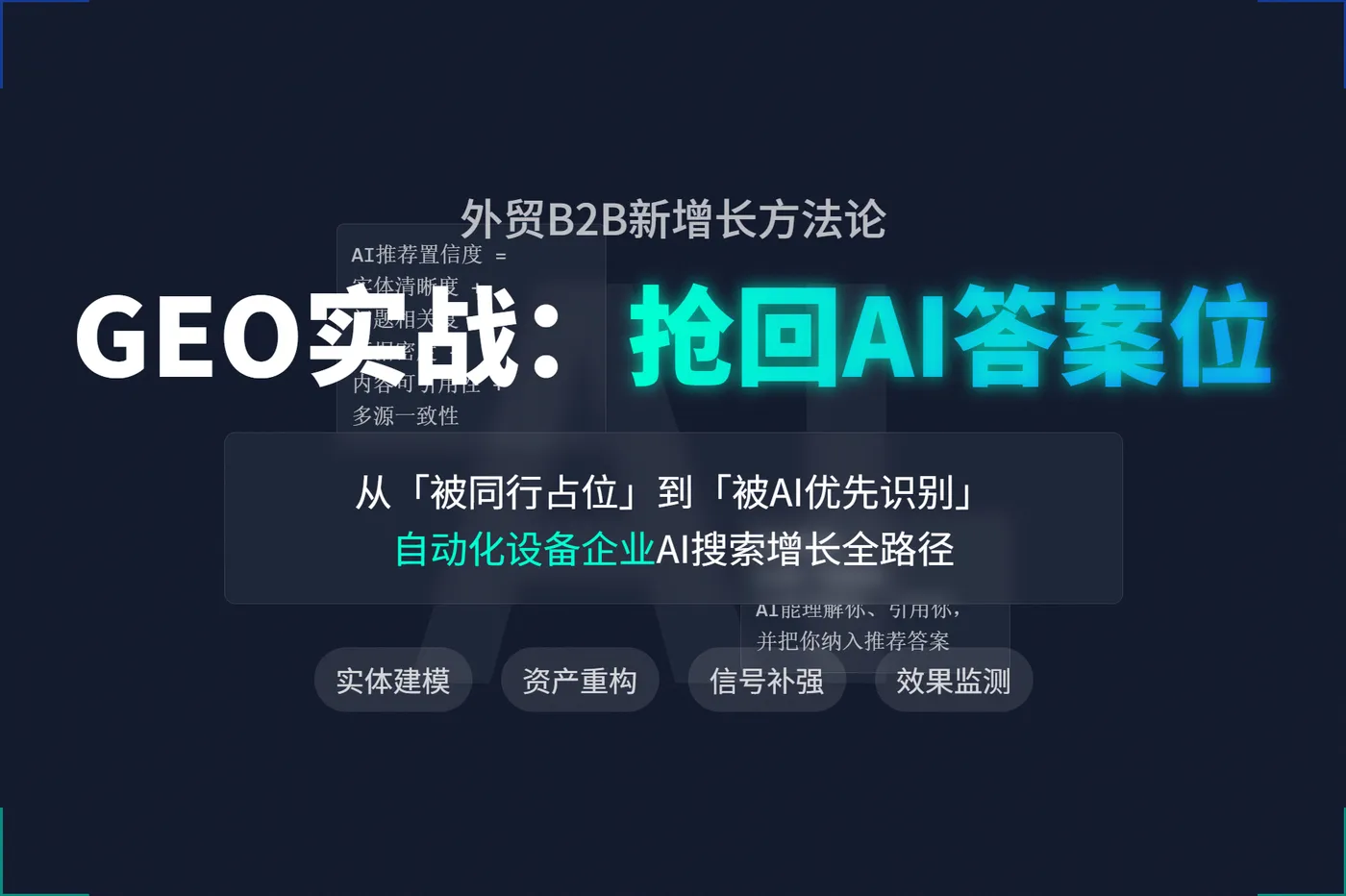
十一、复盘:自动化设备企业抢回AI答案位的关键动作
这次项目最大的经验是:AI答案位不是靠单篇文章抢回来的,而是靠一组内容资产和证据信号共同建立的。
关键动作可以总结为:
1. 建立AI答案位审计表,而不是只看SEO排名
2. 反向拆解同行被AI提及的能力标签
3. 重建企业实体模型,让AI知道你是谁
4. 用客户问题库替代关键词列表
5. 将案例改造成项目证据链
6. 为FAQ、能力页和案例页配置结构化数据
7. 在外部渠道保持企业描述一致
8. 持续监测AI答案中的出现频次和描述准确度
AB客GEO的价值正在于把这些动作串成一条闭环,而不是把GEO理解为“AI写文章”。
它覆盖的是:
企业认知资产
客户问题洞察
GEO内容生产
SEO&GEO网站承载
全球内容分发
询盘转化承接
AI可见性监测
数据归因优化
这也是外贸B2B企业从传统SEO走向AI搜索增长时,必须补齐的基础设施。
十二、总结:AI答案位竞争,拼的是可理解、可引用、可验证
自动化设备企业被同行占据AI答案位,本质上不是一次流量竞争,而是一次认知竞争。
AI更愿意引用谁,取决于谁的信息更清晰;
AI更愿意推荐谁,取决于谁的证据更完整;
客户更愿意询盘谁,取决于谁的内容更能降低决策风险。
对自动化设备企业来说,未来的官网不应只是产品展示页,而应成为AI可读取的项目能力知识库。
传统SEO解决的是:
让客户搜索时找到你
GEO进一步解决的是:
让客户提问时,AI能理解你、引用你,并把你纳入推荐答案
所以,所谓“反超同行”,不是复制同行内容,也不是短期堆文章,而是把企业真实能力、项目过程、技术经验和信任证据,系统化表达成AI可理解的数字资产。
谁能更早完成这件事,谁就更有机会从“被同行占位”走向“被AI优先识别”。