在本节,将演示基于Spring Security安全认证功能。该应用代码可以在security basic目录下找到。
19.5.1 添加依赖
添加Spring Security的依赖时,由于是使用的snapshot版本,所以,要配置Spring Snapshots仓库。配置如下。
<!-- Spring Snapshots仓库 -->
<repositories>
<repository>
<id>spring-snapshots</id>
<name>Spring Snapshots</name>
<url>https://repo.spring.io/snapshot</url>
</repository>
</repositories>
<properties>
<spring.version>5.1.5.RELEASE</spring.version>
<jetty.version>9.4.14.v20181114</jetty.version>
<jackson.version>2.9.7</jackson.version>
<spring-security.version>5.2.0.BUILD-SNAPSHOT</spring-security.version>
</properties>
<dependencies>
<dependency>
<groupId>org.springframework</groupId>
<artifactId>spring-webmvc</artifactId>
<version>${spring.version}</version>
</dependency>
<dependency>
<groupId>org.eclipse.jetty</groupId>
<artifactId>jetty-servlet</artifactId>
<version>${jetty.version}</version>
<scope>provided</scope>
</dependency>
<dependency>
<groupId>com.fasterxml.jackson.core</groupId>
<artifactId>jackson-core</artifactId>
<version>${jackson.version}</version>
</dependency>
<dependency>
<groupId>com.fasterxml.jackson.core</groupId>
<artifactId>jackson-databind</artifactId>
<version>${jackson.version}</version>
</dependency><!-- 安全相关的依赖 -->
<dependency>
<groupId>org.springframework.security</groupId>
<artifactId>spring-security-web</artifactId>
<version>${spring-security.version}</version>
</dependency>
<dependency>
<groupId>org.springframework.security</groupId>
<artifactId>spring-security-config</artifactId>
<version>${spring-security.version}</version>
</dependency>
</dependencies>
19.5.2 添加业务代码
业务代码里面包含了模型和控制器。
1.User模型
User类代码如下。
package com.waylau.spring.mvc.vo;
public class User {
private String username;
private Integer age;
public User(String username, Integer age) {
this.username = username;
this.age = age;
}
//省略getter/setter方法
}
2.控制器
控制器HelloController代码如下。
package com.waylau.spring.mvc.controller;
import org.springframework.web.bind.annotation.RequestMapping;
import org.springframework.web.bind.annotation.RestController;
import com.waylau.spring.mvc.vo.User;
@RestController
public class HelloController {
@RequestMapping("/hello")
public String hello() {
return "Hello World! Welcome to visit waylau.com!";}
@RequestMapping("/hello/way")
public User helloWay() {
return new User("Way Lau", 30);
}
}
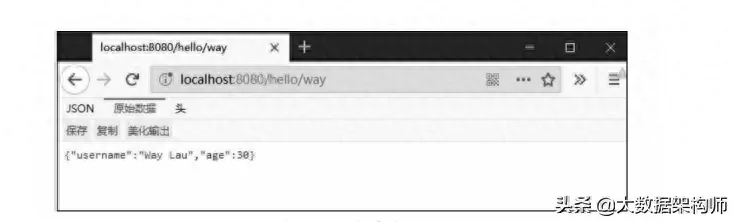
上述控制器的逻辑非常简单,当访问“/hello”时,会响应一段文本;当访问“/hello/way”会返回一个POJO对象。
该POJO对象,可以根据消息转换器的设置,来生成不同格式的消息。
19.5.3 配置消息转换器
添加Spring Web MVC的配置类MvcConfiguration,并在该配置中启用消息转换器。
package com.waylau.spring.mvc.configuration;
import java.util.List;
import org.springframework.context.annotation.Configuration;
import org.springframework.http.converter.HttpMessageConverter;
import org.springframework.http.converter.json.MappingJackson2HttpMessageConverter;
import org.springframework.web.servlet.config.annotation.EnableWebMvc;
import org.springframework.web.servlet.config.annotation.WebMvcConfigurer;
@EnableWebMvc // 启用MVC
@Configuration
public class MvcConfiguration implements WebMvcConfigurer {
public void extendMessageConverters(List<HttpMessageConverter<?>> cs) {
// 使用Jackson JSON来进行消息转换
cs.add(new MappingJackson2HttpMessageConverter());
}
}
由于预先在pom.xml中添加了Jackson JSON的依赖,因此可以使用
Jackson JSON来进行消息转换,将响应消息体转为JSON格式。
19.5.4 配置Spring Security
以下是针对Spring Security的配置。
package com.waylau.spring.mvc.configuration;
import org.springframework.context.annotation.Bean;
import org.springframework.security.config.annotation.web.builders.HttpSecurity;
import
org.springframework.security.config.annotation.web.configuration.EnableWebSecurity;
import
org.springframework.security.config.annotation.web.configuration.WebSecurityConfigurerAd
apter;
import org.springframework.security.core.userdetails.User;
import org.springframework.security.core.userdetails.UserDetailsService;
import org.springframework.security.provisioning.InMemoryUserDetailsManager;
@EnableWebSecurity // 启用Spring Security功能
public class WebSecurityConfig
extends WebSecurityConfigurerAdapter {
/**
* 自定义配置
*/
@Override
protected void configure(HttpSecurity http) throws Exception {
http.authorizeRequests().anyRequest().authenticated()//所有请求都需认证
.and()
.formLogin() // 使用form表单登录
.and()
.httpBasic(); // HTTP基本认证
}
@SuppressWarnings("deprecation")
@Bean
public UserDetailsService userDetailsService() {
InMemoryUserDetailsManager manager =
new InMemoryUserDetailsManager();
manager.createUser(
User.withDefaultPasswordEncoder() // 密码编码器
.username("waylau") // 用户名
.password("123") // 密码
.roles("USER") // 角色
.build()
);
return manager;
}
}
在上述配置中,要启动Spring Security功能,需要在配置类上添加@EnableWebSecurity注解。
安全配置类WebSecurityConfig继承自
WebSecurityConfigurerAdapter。WebSecurity Configurer Adapter提供用于创建一个Websecurityconfigurer实例方便的基类,允许自定义重写其方法。这里,我们重写了configure方法:authorizeRequests().anyRequest().authenticated()方法意味着所有请求都需认证;formLogin()方法表明这是基于表单的身份验证;httpBasic()方法表明该认证是一个HTTP基本认证。
UserDetailsService用于提供身份认证信息。本例使用了基于内存的信息管理器InMemory UserDetailsManager,同时初始化了一个用户名为“waylau”、密码为“123”、角色为“USER”的身份信息。
withDefaultPasswordEncoder()方法指定了该用户身份信息使用默认的密码编码器。
19.5.5 创建应用配置类
AppConfiguration是整个应用的配置类,用于导入Spring Web MVC及Spring Security的配置信息。代码如下。
import org.springframework.context.annotation.ComponentScan;
import org.springframework.context.annotation.Configuration;
import org.springframework.context.annotation.Import;
@Configuration
@ComponentScan(basePackages = { "com.waylau.spring" })
@Import({ WebSecurityConfig.class, MvcConfiguration.class})
public class AppConfiguration {
}
19.5.6 创建内嵌Jetty的服务器
创建内嵌了Jetty的服务器,代码如下。
package com.waylau.spring.mvc;
import java.util.EnumSet;
import javax.servlet.DispatcherType;
import org.eclipse.jetty.server.Server;
import org.eclipse.jetty.servlet.FilterHolder;
import org.eclipse.jetty.servlet.ServletContextHandler;
import org.eclipse.jetty.servlet.ServletHolder;
import org.springframework.web.context.ContextLoaderListener;
import org.springframework.web.context.WebApplicationContext;
import org.springframework.web.context.support.AnnotationConfigWebApplicationContext;import org.springframework.web.filter.DelegatingFilterProxy;
import org.springframework.web.servlet.DispatcherServlet;
import com.waylau.spring.mvc.configuration.AppConfiguration;
public class JettyServer {
private static final int DEFAULT_PORT = 8080;
private static final String CONTEXT_PATH = "/";
private static final String MAPPING_URL = "/*";
public void run() throws Exception {
Server server = new Server(DEFAULT_PORT);
server.setHandler(servletContextHandler(webApplicationContext()));
server.start();
server.join();
}
private ServletContextHandler servletContextHandler(WebApplicationContext ct) {
// 启用Session管理器
ServletContextHandler handler =
new ServletContextHandler(ServletContextHandler.SESSIONS);
handler.setContextPath(CONTEXT_PATH);
handler.addServlet(new ServletHolder(new DispatcherServlet(ct)),
MAPPING_URL);
handler.addEventListener(new ContextLoaderListener(ct));
// 添加Spring Security过滤器
FilterHolder filterHolder=new FilterHolder(DelegatingFilterProxy.class);
filterHolder.setName("springSecurityFilterChain");
handler.addFilter(filterHolder, MAPPING_URL,
EnumSet.of(DispatcherType.REQUEST));
return handler;
}
private WebApplicationContext webApplicationContext() {
AnnotationConfigWebApplicationContext context =
new AnnotationConfigWebApplicationContext();
context.register(AppConfiguration.class);
return context;
}
}
JettyServer将Spring的上下文Servlet、监听器、过滤器等信息都传给了Jetty服务。
19.5.7 应用启动器
创建应用启动类Application,代码如下。
package com.waylau.spring.mvc;
public class Application {
public static void main(String[] args) throws Exception {
new JettyServer().run();
}
}
19.5.8 运行应用
右键运行Application类即可启动应用。
访问
http://localhost:8080/hello/way,会跳转到登录界面,意味着被安全认证拦截了。正如WebSecurityConfig所配置的那样,登录界面是一个form表单,
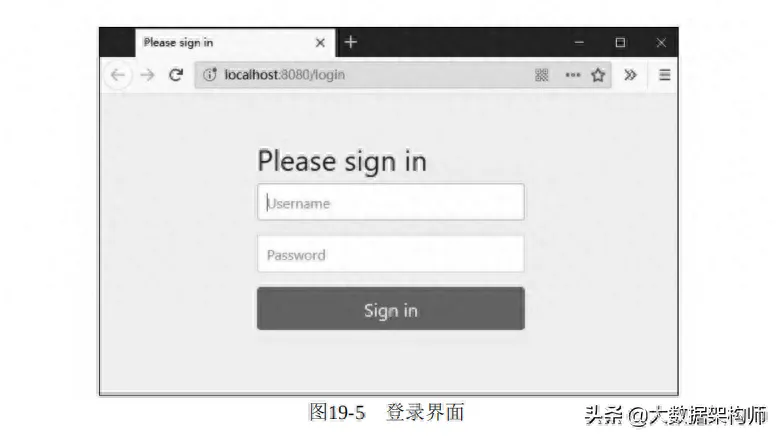
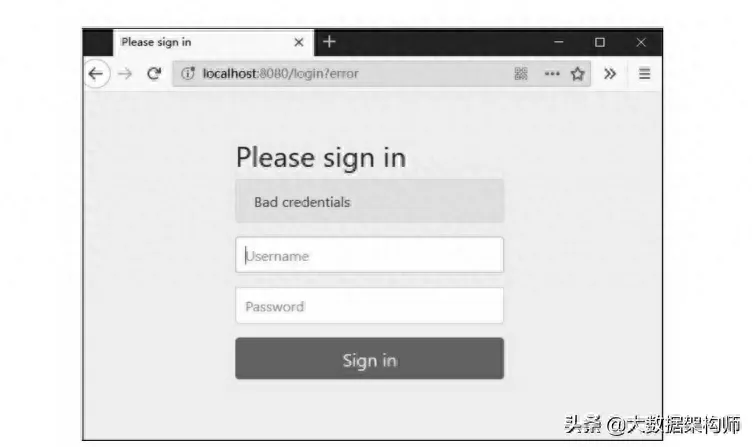
尝试输入一个错误的用户名和密码,可以看到所示的错误提示信息。
用初始化好的用户名和密码进行成功登录,可以看到能够正常访问应用的API
19.6 本章小结
本章介绍了分布式系统安全性的基本概念、加密算法,同时也介绍了安全通道及访问控制。本章也演示了如何基于Spring Security框架来实现安全认证。
本文就是愿天堂没有BUG给大家分享的内容,大家有收获的话可以分享下,想学习更多的话可以到微信公众号里找我,我等你哦。