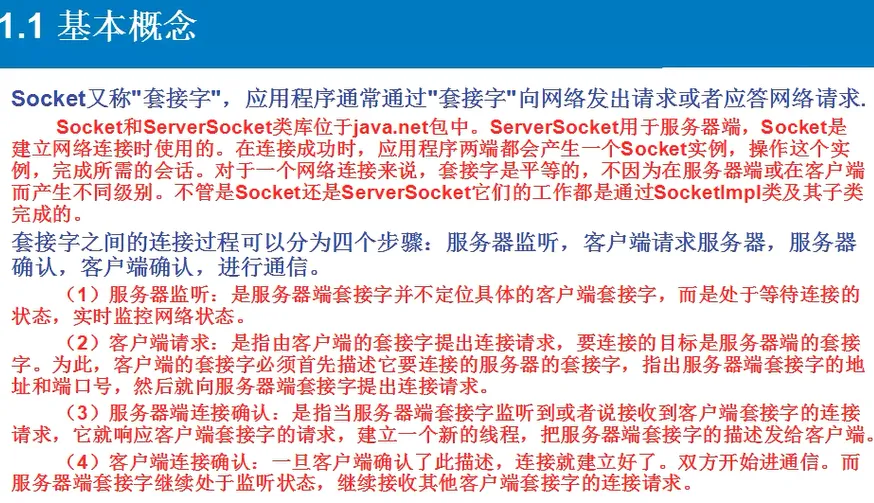
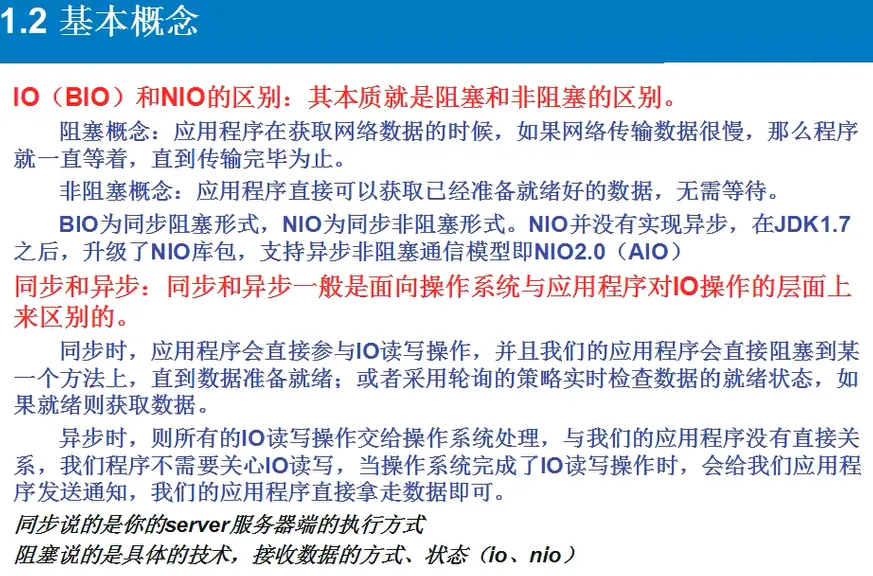
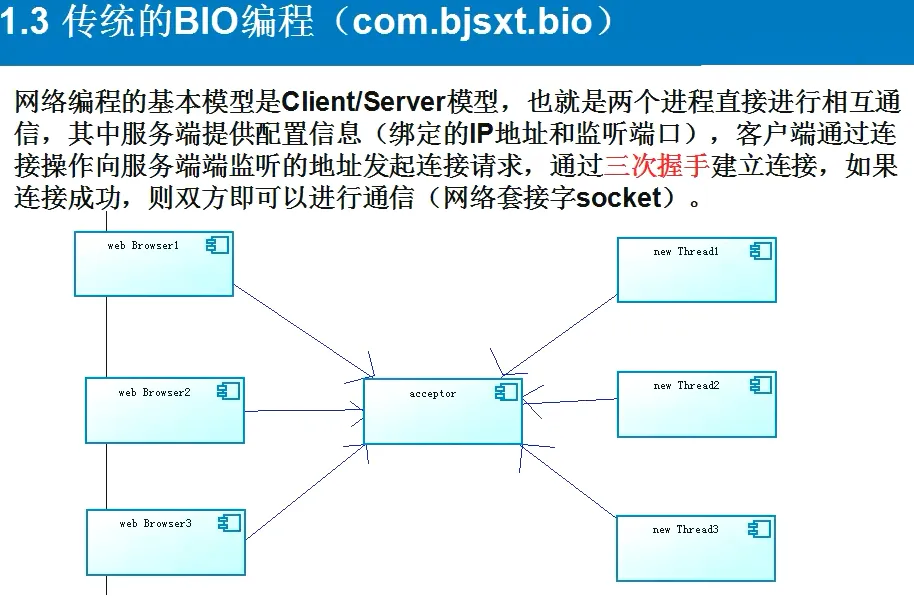
传统的BIO编程,服务器的主线程需要先阻塞,然后等待客户端的请求才去创建线程执行。一般分为两个部分,client和server。在网络良好的情况下,一般没有什么问题,但是网络不好的情况,会导致效率很低。
Server.java
package bhz.bio;

import java.io.IOException;
import java.net.ServerSocket;
import java.net.Socket;

public class Server {

    final static int PROT = 8765;

    public static void main(String[] args) {

        ServerSocket server = null;
        try {
            server = new ServerSocket(PROT);
            System.out.println(" server start .. ");
            while(true){
                //进行阻塞
                Socket socket = server.accept();
                //新建一个线程执行客户端的任务
                new Thread(new ServerHandler(socket)).start();
            }
        } catch (Exception e) {
            e.printStackTrace();
        } finally {
            if(server != null){
                try {
                    server.close();
                } catch (IOException e) {
                    e.printStackTrace();
                }
            }
            server = null;
        }
    }
}
Client.java
package bhz.bio;

import java.io.BufferedReader;
import java.io.IOException;
import java.io.InputStreamReader;
import java.io.PrintWriter;
import java.net.Socket;

public class Client {

    final static String ADDRESS = "127.0.0.1";
    final static int PORT = 8765;

    public static void main(String[] args) {

        Socket socket = null;
        BufferedReader in = null;
        PrintWriter out = null;

        try {
            socket = new Socket(ADDRESS, PORT);
            in = new BufferedReader(new InputStreamReader(socket.getInputStream()));
            out = new PrintWriter(socket.getOutputStream(), true);

            //向服务器端发送数据
            out.println("接收到客户端的请求数据...");
            String response = in.readLine();
            System.out.println("Client: " + response);

        } catch (Exception e) {
            e.printStackTrace();
        } finally {
            if(in != null){
                try {
                    in.close();
                } catch (IOException e) {
                    e.printStackTrace();
                }
            }
            if(out != null){
                try {
                    out.close();
                } catch (Exception e) {
                    e.printStackTrace();
                }
            }
            if(socket != null){
                try {
                    socket.close();
                } catch (IOException e) {
                    e.printStackTrace();
                }
            }
            socket = null;
        }
    }
}
ServerHandler.java
package bhz.bio;

import java.io.BufferedReader;
import java.io.IOException;
import java.io.InputStreamReader;
import java.io.PrintWriter;
import java.net.Socket;

public class ServerHandler implements Runnable{

    private Socket socket ;

    public ServerHandler(Socket socket){
        this.socket = socket;
    }

    @Override
    public void run() {
        BufferedReader in = null;
        PrintWriter out = null;
        try {
            in = new BufferedReader(new InputStreamReader(this.socket.getInputStream()));
            out = new PrintWriter(this.socket.getOutputStream(), true);
            String body = null;
            while(true){
                body = in.readLine();
                if(body == null) break;
                System.out.println("Server :" + body);
                out.println("服务器端回送响的应数据.");
            }

        } catch (Exception e) {
            e.printStackTrace();
        } finally {
            if(in != null){
                try {
                    in.close();
                } catch (IOException e) {
                    e.printStackTrace();
                }
            }
            if(out != null){
                try {
                    out.close();
                } catch (Exception e) {
                    e.printStackTrace();
                }
            }
            if(socket != null){
                try {
                    socket.close();
                } catch (IOException e) {
                    e.printStackTrace();
                }
            }
            socket = null;
        }
    }
}
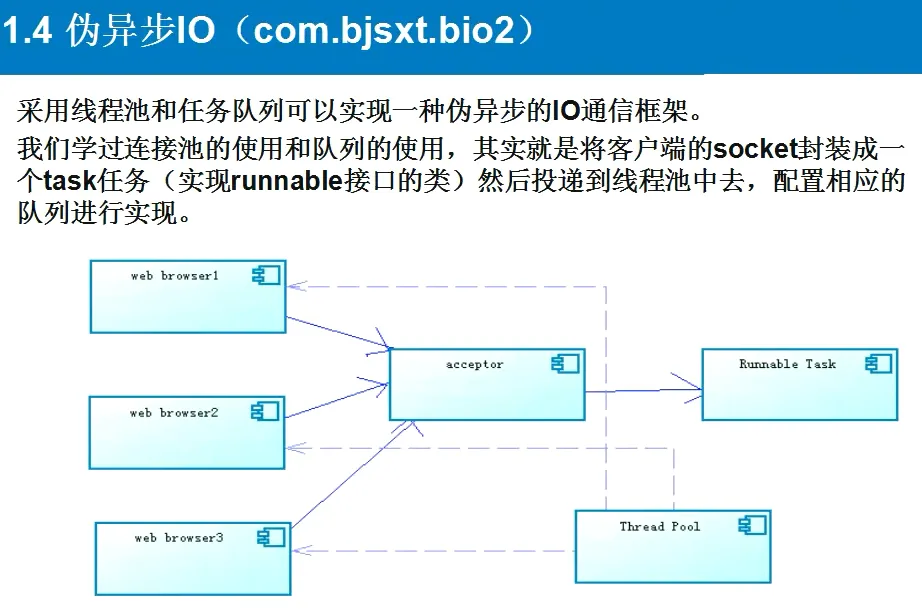
伪异步IO一般都是通过线程池来实现的,它的效率比传统的网络IO要高,它是异步执行的。代码就是比上面的代码多了一个HandlerExecutorPool.java,而且Server.java也改写了一下。
HandlerExecutorPool.java
import java.util.concurrent.ArrayBlockingQueue;
import java.util.concurrent.ExecutorService;
import java.util.concurrent.ThreadPoolExecutor;
import java.util.concurrent.TimeUnit;

public class HandlerExecutorPool {

    private ExecutorService executor;
    public HandlerExecutorPool(int maxPoolSize, int queueSize){
        this.executor = new ThreadPoolExecutor(
                Runtime.getRuntime().availableProcessors(),
                maxPoolSize,
                120L,
                TimeUnit.SECONDS,
                new ArrayBlockingQueue<Runnable>(queueSize));
    }

    public void execute(Runnable task){
        this.executor.execute(task);
    }
}
Server.java
public class Server {

    final static int PORT = 8765;

    public static void main(String[] args) {
        ServerSocket server = null;
        BufferedReader in = null;
        PrintWriter out = null;
        try {
            server = new ServerSocket(PORT);
            System.out.println("server start");
            Socket socket = null;
            HandlerExecutorPool executorPool = new HandlerExecutorPool(50, 1000);
            while(true){
                socket = server.accept();
                executorPool.execute(new ServerHandler(socket));
            }

        } catch (Exception e) {
            e.printStackTrace();
        } finally {
            if(in != null){
                try {
                    in.close();
                } catch (Exception e1) {
                    e1.printStackTrace();
                }
            }
            if(out != null){
                try {
                    out.close();
                } catch (Exception e2) {
                    e2.printStackTrace();
                }
            }
            if(server != null){
                try {
                    server.close();
                } catch (Exception e3) {
                    e3.printStackTrace();
                }
            }
            server = null;
        }
    }
}
NIO编程
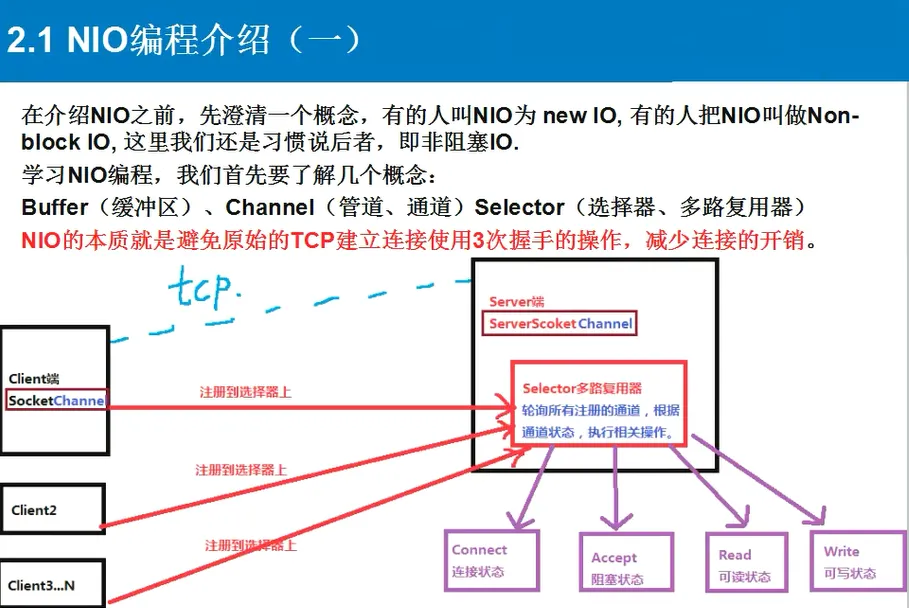
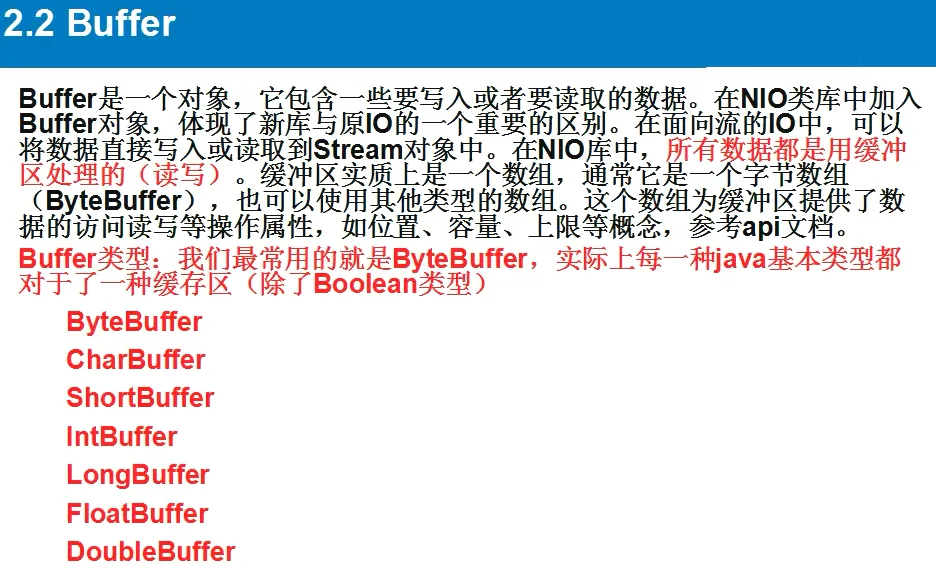
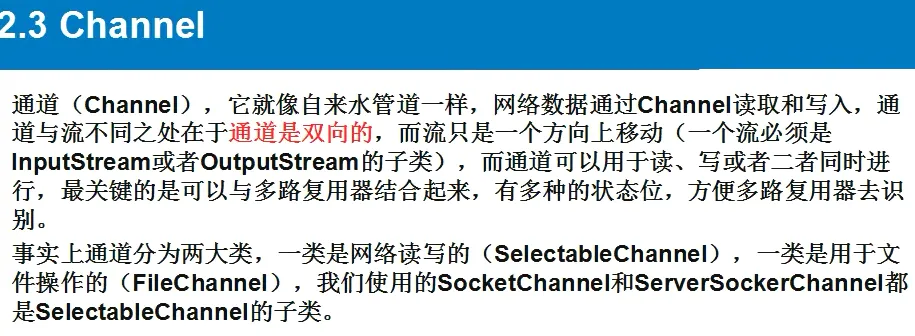
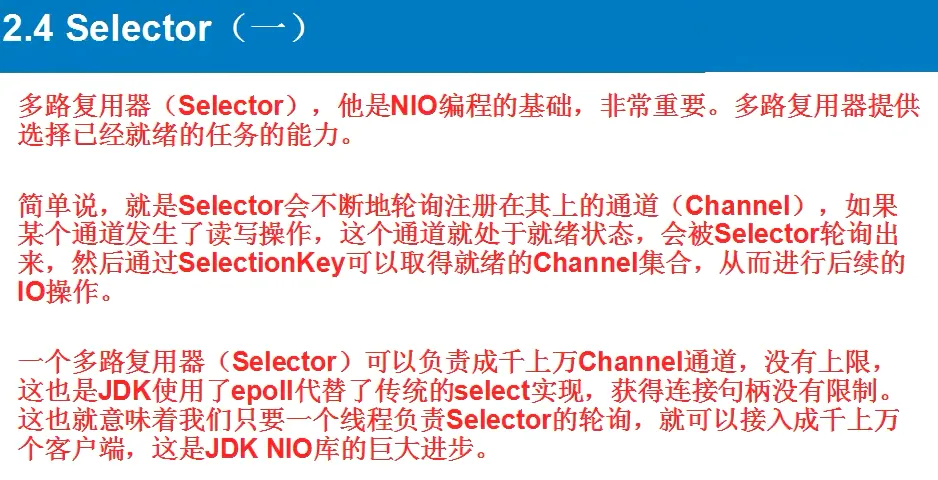
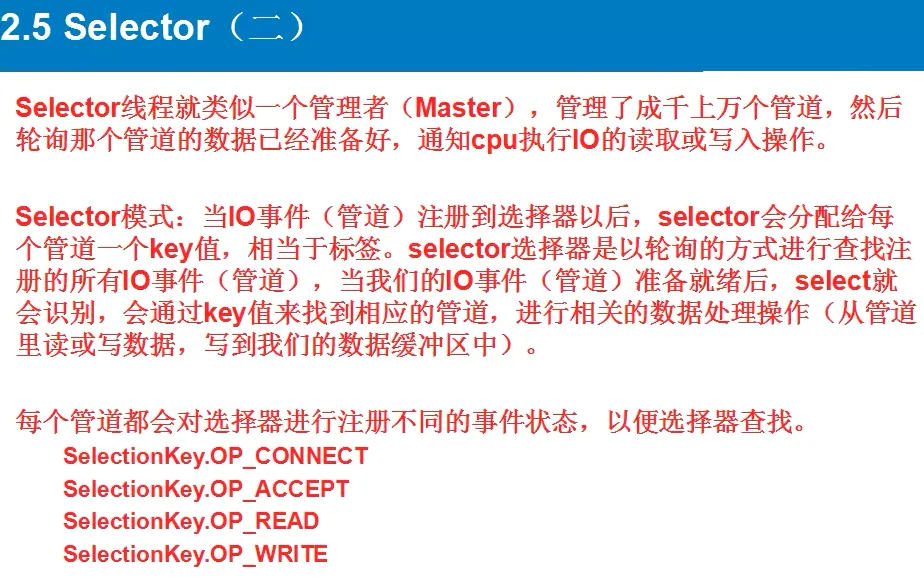
nio编程的核心是缓冲区,也就是Buffer对象,而传统的IO是流,也就是Stream对象。因为nio编程的操作比较繁琐,所以一般都是通过netty等网络编程框架来实现网络编程。
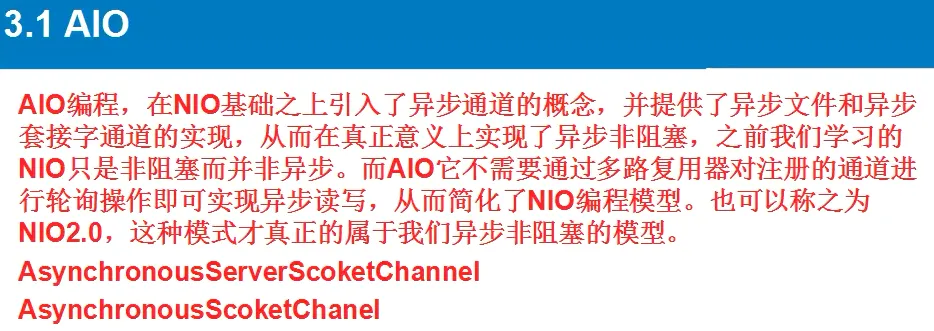
AIO编程